Table of Contents
You have discovered the right leather wallet. The design itself is perfect and the tag boasts of the fact that this is made of genuine leather. But as we covered in our Leather Grades Guide labels can be misleading.
Unless a label is sufficient to assure you that you are buying a quality product, how do you know that you are spending on a lifetime worth of craftsmanship?
The process in determining high quality leather is a feel. You do not have to be an expert leatherworker but one needs to know what to look at, touch, and smell. The following are five real-life tests that you can perform to detect quality leather that is really high.
1. The Sensory Test: Smell and Touch
The senses are the best equipment to identify synthetic or highly processed materials.
Premium leather especially the vegetable tanned leather is characterized by a unique, tony, and natural scent. It smells natural. The cheap, mass-produced leather or fake-leather will most likely have a bitter, chemical smell resembling plastic or very strong glue.
The Touch High-quality leather is animate-feeling leather. It is supposed to be supple, flexible and slightly textured and organic. The real leather also absorbs body heat and retains it making it warm to touch. Images Fake or highly coated leathers are cold, stiff and artificially smooth just like vinyl.
2. The Wrinkle and Press Test
Real animal skin is also elastic and textured just like human skin.
Push your thumb off the leather. Minimal leather, leather that is of high quality will wrinkle and pull around your thumb changing colour or texture temporarily before returning to its natural form. When you squeeze into the material and it just collapses like a sponge or yet again has a completely smooth and plastic looking surface, you are probably dealing with a man made grain or a milled down grain.
3. The Visual Inspection: Look for Imperfections
In the world of leather, it is actually called perfection as a red flag.
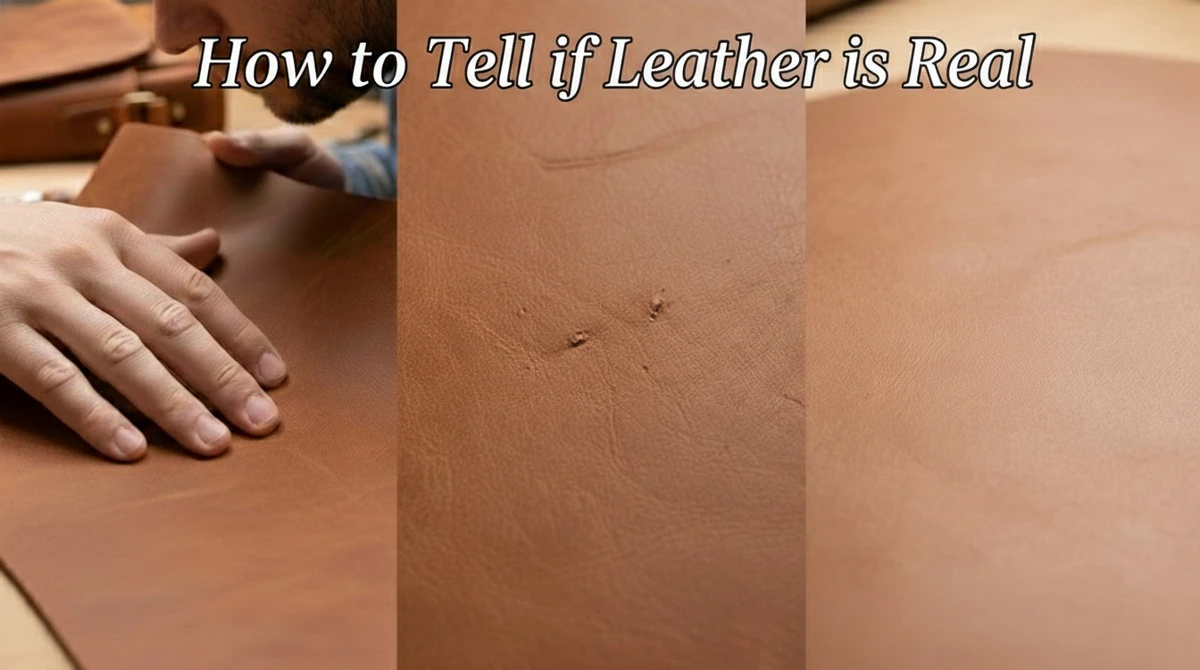
Examine the surface closely. When the feeling appears to be completely smooth and repeating, then it is most likely a machine-pressed pattern on inexpensive or imitation leather. Natural features of the hide shall be highly exhibited through premium leather. Look for:
- Tiny, irregular pores
- Subtle variations in color
- Minor natural scars, bug bites, or stretch marks
These are not flaws; they are the marks of the genuineness and make sure that two works cannot be exactly the same.
4. The Edge Test
How the edges of a leather item are ended tell much about how serious the manufacturer is concerning quality.
- Burnished Edges: Higher artisans polish with friction, natural waxes and water, to burnish the raw edges, closing them into a smooth, durable finish.
- Raw Edges: When raw, a good piece will display a solid dense cross-section of fibrous structure. When you can see a fabric net or a foamy core, it is a synthetic fabric.
- Painted Edges: Cheaply-made merchandise will have the edges coated with a thick, sticky layer of rubbery plastic to conceal poor-quality bonded leather or synthetic cores. In the long run, this elastic advantage will split and peel off.
5. The Water Drop Test
Note: Only perform this test on items you own, and avoid using it on suede or nubuck.
Apply one drop of water on the leather. The quality leather is porous and will absorb the moisture in a short-term moment, but it will leave a best temporary spot as moisture before it evaporates naturally. The water will not be absorbed in synthetic materials, plastics or highly coated cheap leathers, the drop will just pool and rest on the surface.
The Hardware and Stitching Clue
Although not directly testing the hide it is the workmanship around the leather that is a colossal pointer of quality. Leather is a costly material, which is of high quality. Craftsmen who invest in good hides will not wreak havoc on them with low quality hardware or shoddy work.
Search after thick, even and straight stitching. Test the zippers, buckles and fasteners–they are supposed to be heavy and should be of solid brass or stainless steel and not of weak plated materials that will cut and rust.
Experience True Craftsmanship at We Craft Leathers
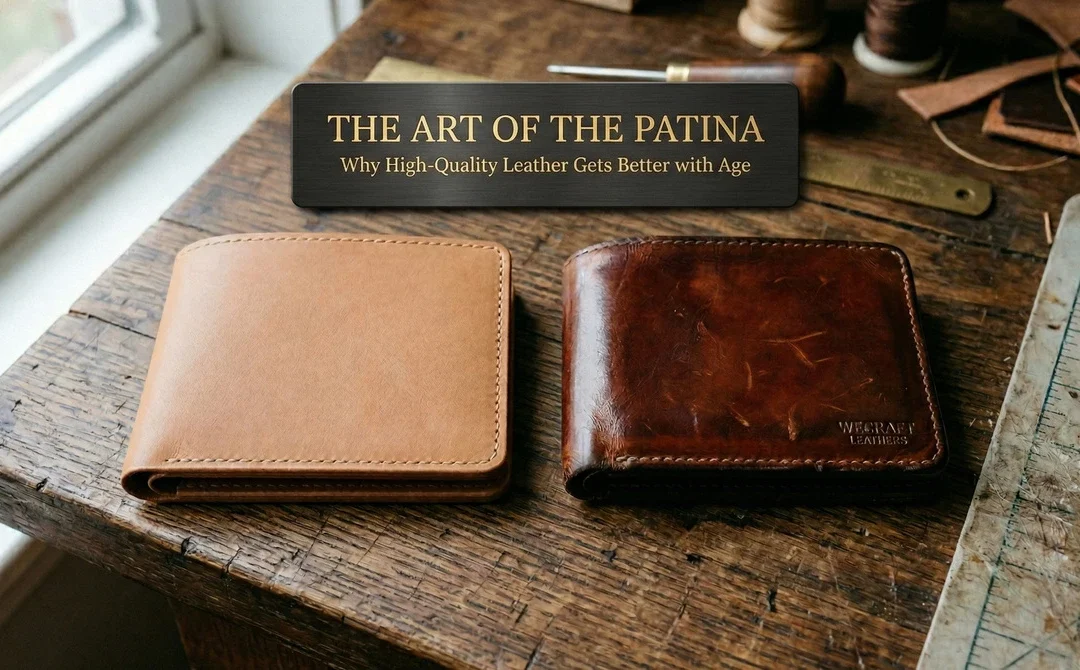
Once you learn to recognize the quality of leather, you are in a position to make investments and not purchase. A piece made of premium leather is not going to peel or perish in a year; he or she should be able to gain a beautiful covering, a patina, and be made lovelier with each adventure.
We Craft Leathers do not have to say much because the quality of our materials speaks volumes. We are getting the best hides available and we employ the ancient methods of craftsmanship to make sure that every work of our hands will stand the test of time.
There is no need to go far, go and see our latest lineup today and experience the undeniable feel of genuine leather.